
In aerospace and defense environments, electronic systems must operate flawlessly under extreme and unpredictable conditions. From aircraft avionics to military communication systems, even minor electromagnetic interference can lead to serious operational failures. This is where Electromagnetic Compatibility (EMC) testing plays a vital role.
This blog explores the importance, standards, challenges, and best practices of EMC testing in aerospace and defense applications, helping manufacturers and engineers ensure safety, compliance, and performance.
What is EMC Testing?
EMC (Electromagnetic Compatibility) testing ensures that electronic equipment can:
It includes two key aspects:
Why EMC Testing is Critical in Aerospace and Defense
Aerospace and defense systems are highly sensitive and interconnected. Failure due to electromagnetic interference (EMI) can compromise safety, mission success, and national security.
Key EMC Standards for Aerospace and Defense
To ensure reliability and global compliance, products must adhere to specific EMC standards:
Compliance with these standards ensures that systems are safe, interoperable, and globally accepted.:
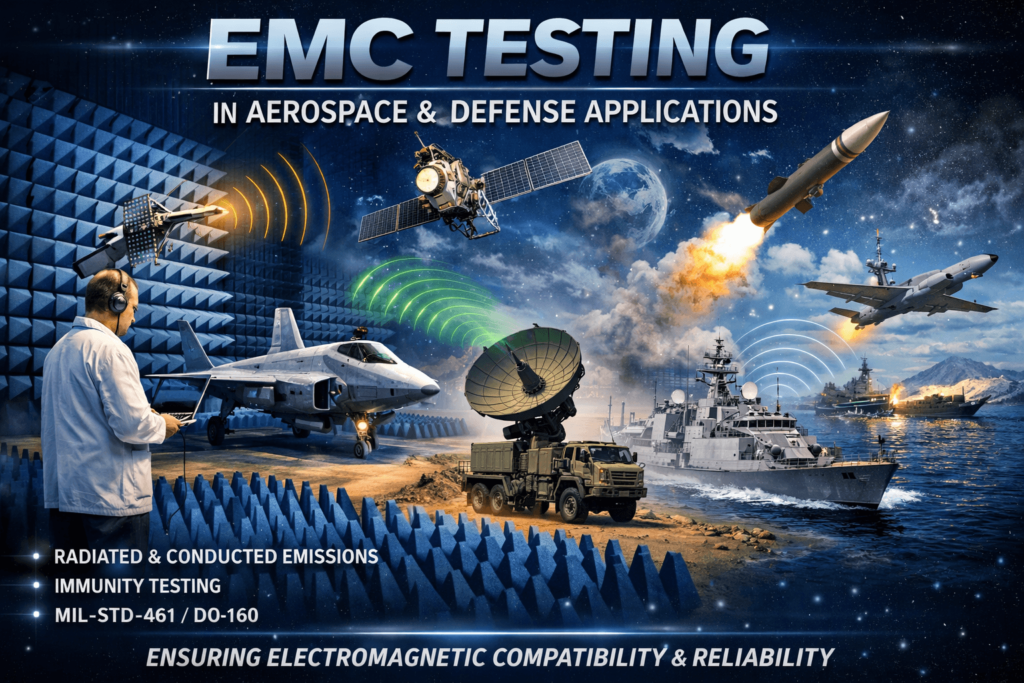
Common EMC Tests in Aerospace and Defense
Common EMC Tests in Aerospace and Defense
EMC testing is a cornerstone of reliability, safety, and compliance in aerospace and defense applications. It ensures that mission-critical systems operate without interference, even in the most demanding environments.
By adopting best practices and adhering to global standards, organizations can build robust, compliant, and future-ready systems that meet the highest levels of performance and safety. Contact ARRAA Labs Today for Electrical and Electronic Products EMI EMC Testing